From messy-girl indie sleaze and lingerie dressing to pointy shoes, giant bags and the return of the trench coat
There is something wonderfully London about a fashion week that refuses to behave itself.
New York can do polished. Paris can do grandeur. Milan can do luxury. But London has always been the city where someone will put a ballgown with a pair of battered trainers, wear a Victorian blouse with a football shirt and somehow make the whole thing look completely intentional.
London Fashion Week Spring/Summer 2027, which ran from 17–21 September, was no exception.
This season felt particularly interesting because the established British fashion houses were back in force. McQueen returned to the London schedule for the first time since 2001. Christopher Kane made his debut at Mulberry. Burberry closed the week with a collection developed with legendary British textile designer Celia Birtwell. Meanwhile, Simone Rocha, Erdem, Roksanda, Chopova Lowena and a host of younger designers continued doing what London does best: making clothes that are difficult to put neatly into one category.
And then there was M&S.
The high-street giant made its London Fashion Week debut during its centenary year, staging a see-now-buy-now show with models including Erin O’Connor and Jodie Kidd. It was a fascinating reminder that British fashion isn’t only about the luxury houses. It is also about the high street, the everyday wardrobe and the strange ability of London to put all of these things in the same room.
So what actually came out of London Fashion Week?
Here are 10 of the biggest trends and ideas from the Spring/Summer 2027 shows.
1. Messy Girl / Indie Sleaze Is Back
If you’ve been wondering what happened to the carefully curated, polished Instagram aesthetic of the last few years, London Fashion Week has an answer:
It got bored.
One of the clearest stories of SS27 was the return of what ELLE describes as indie sleaze — and what we might more casually call the messy girl aesthetic.
Think skinny or narrow trousers, leather jackets, slightly dishevelled hair, visible underwear, rock-star styling, worn-in clothes, smudged makeup and the general feeling that you got dressed while listening to an old playlist at 1am.
Oscar Ouyang, Petra Fagerström and Aaron Esh all tapped into this world, with ELLE specifically highlighting the return of moto jackets and narrow, hip-hugging trousers. Aaron Esh presented his collection at Camden’s Electric Ballroom, which feels almost suspiciously appropriate for the revival of indie sleaze.
But this isn’t quite the 2008 version of indie sleaze.

There are fewer American Apparel leggings and more considered tailoring. Less The Hills, more Skins. Less “I haven’t tried” and more “I have very deliberately tried to look like I haven’t tried.”
That distinction matters.
The new messy girl isn’t necessarily about looking untidy. It’s about rejecting perfection.
A leather jacket over a delicate dress. Lace with something masculine. A beautiful handbag with something slightly battered. A slip dress that has been allowed to fall off one shoulder.
Fashion has spent several seasons becoming increasingly polished. London seems to be suggesting that perhaps things are more interesting when they’re a little bit wrong.
2. Underwear Is Still Outerwear
The naked-dressing trend isn’t going anywhere. In fact, London has made it considerably more romantic.
At Erdem, Simone Rocha and KNWLS, underwear appeared underneath, over or through other clothes. Sheer dresses revealed bras and bralettes; slips were deliberately loosened; lingerie became part of the visible construction of an outfit rather than something hidden underneath it.
Erdem took this particularly far.

Known for embroidery, historical references and very English femininity, Erdem Moralioglu sent beaded bras and hot pants down the runway, sometimes over shirting and sometimes underneath transparent dresses.
At Simone Rocha, the effect was more romantic and almost devotional: sheer fabric, lace, roses, velvet and exposed layers of underwear.
The important thing is that this doesn’t necessarily mean more naked.
Instead, underwear is becoming another fashion texture.
Lace becomes fabric. A bra becomes a decorative object. A camisole becomes a layer. A slip becomes the foundation of an entire outfit.
It is lingerie as architecture.
3. Lace Is Everywhere
If one material kept appearing again and again, it was lace.
Bora Aksu, Dreaming Eli, Yuhan Wang and Francesca Lake all used it in very different ways, from romantic Victorian-style pieces to much more deconstructed and provocative versions.
Lace is interesting because it sits right between opposites.
It can be innocent or erotic. Victorian or punk. Delicate or aggressive.
And this season London designers weren’t necessarily treating lace as occasionwear.
Instead, it was being mixed with everyday clothing.
A lace skirt with a huge jumper.
A sheer lace top underneath tailoring.
Lace tights with an oversized coat.
A romantic dress with chunky shoes.
This makes lace one of those runway trends that can actually migrate into a normal wardrobe without requiring you to suddenly become a completely different person.
Which is useful.
Because while fashion editors may be able to wear a completely transparent lace dress to a Tuesday morning show, the rest of us might prefer a slightly less ambitious interpretation.
4. The Pointy Shoe Is Getting Its Revenge
For several years fashion has been obsessed with chunky trainers, platforms, square toes and enormous footwear.
London Fashion Week offered a rather different proposition:
make the foot look long again.
Pointed toes, sharp pumps and elongated shoes are creeping back into the fashion vocabulary.
The effect is surprisingly powerful. A pointed shoe instantly makes a loose trouser, jeans or oversized jacket look more polished.
And it works particularly well with the new narrow silhouettes appearing alongside the indie-sleaze revival.
Think:
skinny trouser + pointed shoe + oversized jacket
or
long skirt + sharp ankle boot + enormous coat.
The pointed shoe also appeared alongside the return of more decorative hosiery and lace stockings, creating a slightly old-fashioned, slightly wicked combination. London fashion has always been rather good at making “ladylike” things feel vaguely dangerous.
5. Scrunched, Ruched and Gathered Shoes
And then, because London refuses to make anything straightforward, the pointed shoe has a slightly strange cousin:
the scrunched shoe.
ELLE highlighted gathered and ruched footwear as one of the defining footwear ideas of the season, with Aaron Esh and Petra Fagerström showing gathered heels while Keburia and Simone Rocha explored ruched slipper-like shoes.
The shape looks almost as though the shoe has been gathered up like fabric.
It is another example of fashion becoming more interested in texture and irregularity.
Instead of the perfectly smooth pump, we get something that looks squeezed, folded, wrinkled or manipulated.
It is a tiny detail, but these are often the trends that become surprisingly influential because they can be applied to an otherwise simple outfit.
6. Oxblood Is Coming for Brown
Chocolate brown has had a very good few years.
Now it has competition.
Oxblood, burgundy and deep wine red appeared across the London shows, giving the dark-neutral wardrobe a slightly more dramatic alternative. Glamour UK picked out oxblood as one of the season’s key colours, particularly at Labrum and Roksanda.
It is easy to see why.
Oxblood works with black, cream, denim, grey and camel, but has more emotional intensity than brown.
It also looks particularly good in leather.

Basically, if chocolate brown has been your safe fashion colour for the last couple of seasons, London has just handed you something slightly more mischievous.
7. The Track Jacket Goes Out-Out
This might be one of the most London trends of the entire season.
The track jacket — normally associated with the gym, football terraces, teenagers and people running for a bus — has been elevated onto the runway.
At Burberry, Daniel Lee combined technical windbreakers and outerwear with sequinned skirts and dresses. Ahluwalia also mixed sporty elements with decorative fringed details.
And this feels very London.
The city has always been brilliant at mixing formal and informal clothing.
A suit with trainers.
A vintage dress with a bomber jacket.
A football shirt underneath tailoring.
A Barbour with something completely unsuitable underneath it.
The track jacket is now joining that vocabulary.
The trick is contrast.
Don’t wear the track jacket with matching tracksuit trousers unless you actually want to look like you’re going to the gym.

Instead, wear it with something completely unexpected.
Track jacket + long skirt.
Track jacket + lace.
Track jacket + heels.
Track jacket + evening bag.
Sporty does not necessarily mean casual anymore.
8. Big, Strange, Wonderful Bags
The small minimalist handbag has been having its moment.
London appears to be getting bored of it.
The bags at SS27 were often colourful, textured and deliberately decorative.
ELLE described the trend as “cloud bags”, highlighting artisanal bags with fringe, feathers and multicoloured details at Roksanda, Erdem and Simone Rocha.
These weren’t necessarily bags designed to disappear into an outfit.
They were accessories with personalities.
There were fringes, feathers, embellishment and exaggerated textures.
This is particularly interesting because accessories are often where fashion trends become most accessible.

You don’t need an entirely new wardrobe to participate in a trend.
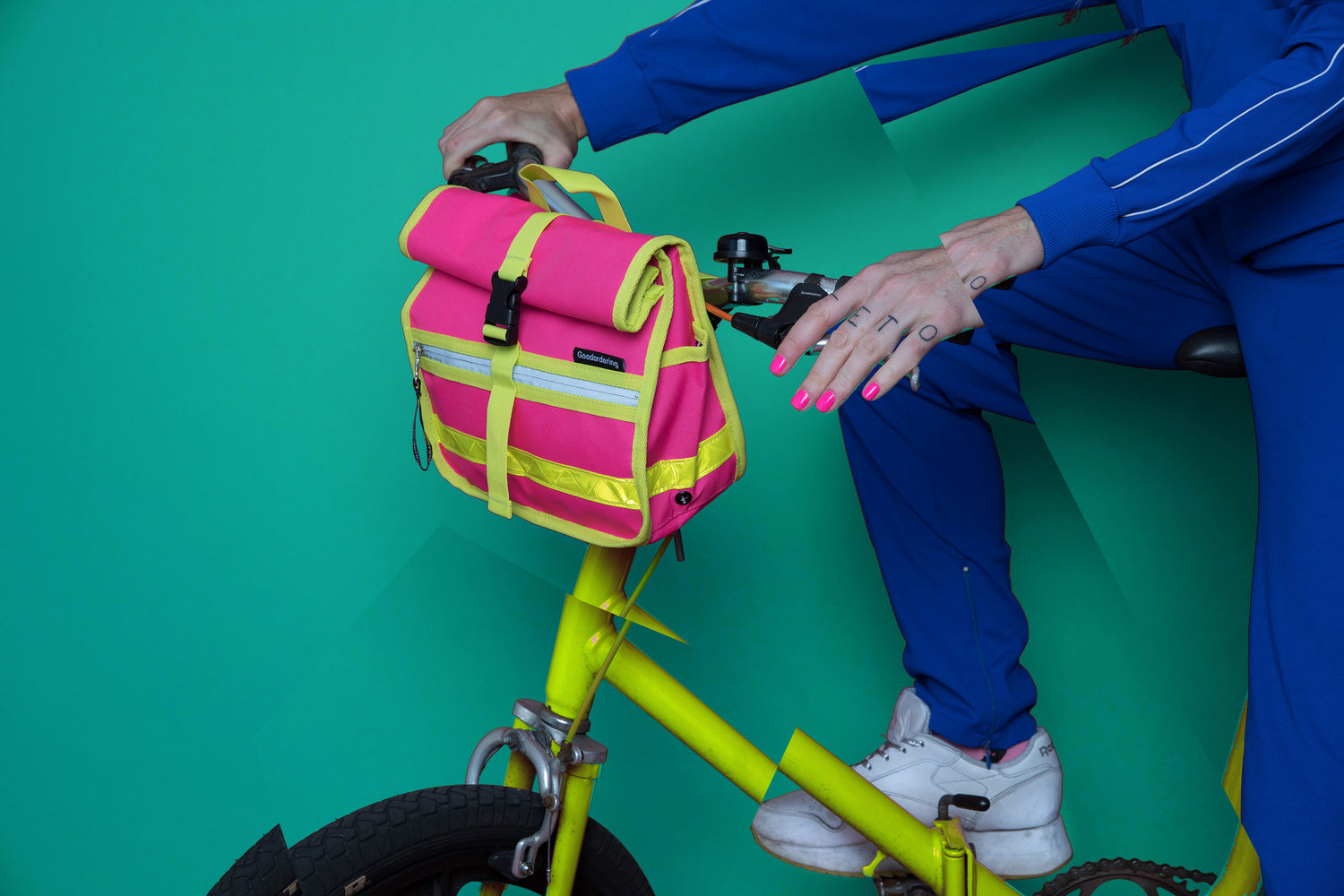
You can buy — or make — one strange bag.
One embroidered bag.
One enormous colourful bag.
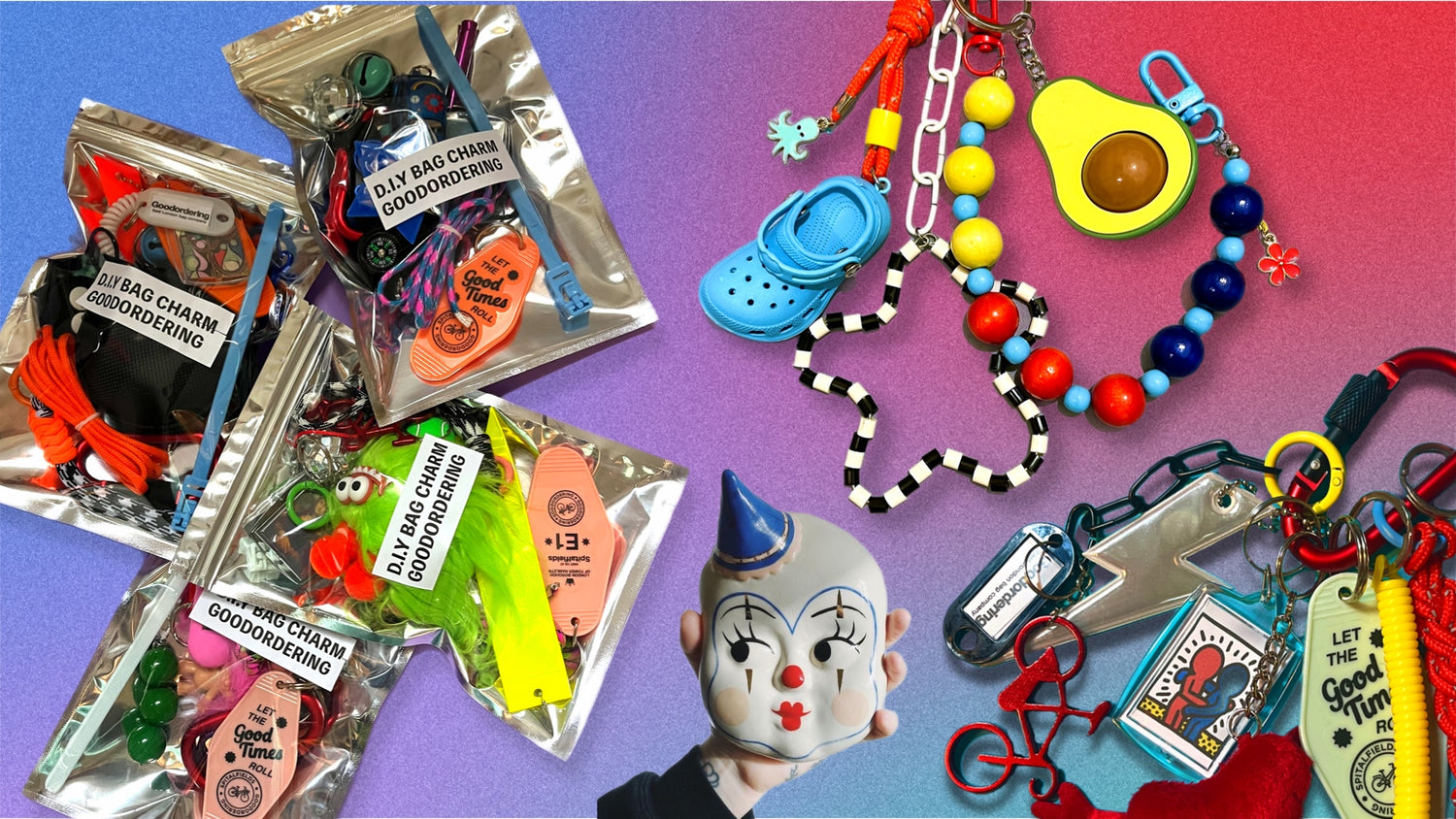
One bag covered in charms.
One bag that looks slightly like it has escaped from a craft cupboard.
And suddenly the outfit changes.
9. Romance Gets Weird
London has never really done straightforward romance.
This season was no different.
There were flowers, lace, bows, corsetry, tulle, roses and historical references — but almost everything had something slightly strange about it.
Simone Rocha is probably the clearest example.
Her SS27 collection was inspired partly by Caravaggio’s The Taking of Christ, with the Old Master aesthetic translated into deep reds, black, blue velvet, roses, lace, sheer fabrics and exaggerated silhouettes. The collection was shown at the Old Bailey, adding another deliciously strange layer to the whole thing.
Roses appeared around necklines and hoods. Romantic fabrics were paired with tougher garments. Bomber jackets appeared alongside floral embellishment.

It was romantic, but never sugary.
That seems to be the direction fashion is moving in generally:
femininity with a little menace.
The pretty dress needs a tough shoe.
The bow needs a leather jacket.
The lace needs something ugly.
The flower needs a thorn.
10. Heritage, But Make It Weird
Perhaps the biggest trend of all wasn’t an item of clothing.
It was the return of British fashion history — but with designers deliberately messing around with it.
The clearest example was Burberry.
Daniel Lee collaborated with the 85-year-old British textile designer Celia Birtwell, bringing her hand-drawn florals, faces and patterns into Burberry’s traditional world of trenches and checks.
The effect was surprisingly fresh.

Classic Burberry pieces were combined with colourful florals, gingham, stripes, puffed hems and deliberately imperfect textures.
The famous check was no longer behaving itself.
And that idea — heritage without reverence — ran through the week.
Christopher Kane’s first collection for Mulberry mined the house’s leather heritage while incorporating his own more provocative vocabulary. Vogue reported an enthusiastic reception and standing ovation, with Kane reworking Mulberry’s Bayswater codes and introducing new accessories.
At McQueen, Seán McGirr’s first London show for the house combined Savile Row tailoring with rave culture, corsetry and theatrical eveningwear. ELLE described it as a meeting of Savile Row and rave, while the show itself took place in the atmospheric Lincoln’s Inn chapel.
London’s fashion history isn’t being treated like a museum.
It’s being stolen, cut up and put back together differently.
And that’s probably the most London thing you could do with it.
The Designers Everyone Was Talking About
There were a lot of shows packed into five days, but several designers and houses generated particularly strong critical attention.
Christopher Kane at Mulberry
This was one of the major stories of the week.
Christopher Kane’s return to the fashion stage coincided with Mulberry’s return to London Fashion Week. His collection, titled “City Town Country,” mixed Mulberry’s leather heritage with Kane’s sharper, more provocative design language.
Leather appeared extensively, while elements of the Bayswater bag were transformed into clothing details and accessories.
Vogue reported an enthusiastic reception and standing ovation following the show.
It was also a fascinating meeting of two pieces of British fashion history.
Kane’s fashion vocabulary has always been about tension — sexy and severe, glamorous and slightly aggressive — while Mulberry brings its own history of British leather goods and countryside associations.
The combination makes a lot of sense.
Simone Rocha
If you like fashion that feels halfway between clothing and theatre, Simone Rocha remains one of London’s essential designers.
For SS27 she took inspiration from Caravaggio and the idea of finding beauty in unexpected places.
The result was an extraordinary combination of roses, velvet, lace, tulle, sheer fabrics, bomber jackets, ballet-inspired drop waists and dramatic accessories.
It was romantic without being conventional.
And perhaps that is why Rocha continues to feel so distinctly London.
Burberry + Celia Birtwell
Burberry’s closing show may have been the most obvious meeting of British fashion past and present.
Celia Birtwell’s prints brought the spirit of 1960s and 1970s London into Daniel Lee’s Burberry world.
The result included floral trenches, checked tailoring, sporty jackets, stripes, embroidered pieces and a deliberately lived-in quality. Central Cee also made his runway debut, underlining the collection’s attempt to connect traditional British fashion with contemporary London culture.
There was something particularly nice about seeing Birtwell’s hand-drawn aesthetic placed against the famously controlled Burberry check.
The check got messy.
And it looked rather good for it.
McQueen
Seán McGirr’s first official London Fashion Week show for McQueen was always going to attract attention.
The collection deliberately placed Savile Row next to rave culture.
Sharp tailoring appeared beside corseted dresses, sheer skirts and dramatic eveningwear. Models had sculptural, gelled hair, while the venue — a 17th-century chapel — provided an appropriately gothic backdrop.
The interesting thing about McGirr’s collection is that it wasn’t simply an exercise in copying Alexander McQueen’s archive.
Instead, the collection attempted to work with the house’s existing codes while looking at contemporary London.
Which means rave culture, tailoring, gothic romance, nightlife and historical references all ended up in the same wardrobe.
Again: very London.
Erdem
Erdem’s SS27 collection explored the story of Barbette, the Texan-born trapeze artist and gender-fluid performer who fascinated artists including Jean Cocteau and Man Ray.
The collection explored masculine and feminine codes through tailoring, eveningwear, feathers, sheer fabrics and lingerie-inspired pieces.
British Vogue noted the collection’s emphasis on the tension between masculine and feminine and its windswept, theatrical presentation at The Roundhouse.
It also contributed to one of the bigger trends of the season: beautiful clothes that don’t sit comfortably inside traditional gender expectations.
Roksanda
Roksanda brought colour and sculptural shape to the National Theatre.
Her collection moved between everyday pieces and more dramatic silhouettes, with safari jackets, striped shirtdresses, ombré tailoring and bold accessories. The show drew on the work of textile artist Françoise Grossen and her monumental rope sculptures.
It was a reminder that “wearable” doesn’t have to mean boring.

A beige jacket can still have enormous graphic pockets.
A shirt can have sleeves that jut dramatically away from the body.
A simple outfit can be transformed by colour and proportion.
And Then There Was M&S
It would be impossible to talk about London Fashion Week 2027 without mentioning Marks & Spencer.
The retailer staged its first LFW runway show during its centenary year, with a see-now-buy-now model.

The collection looked backwards and forwards simultaneously, pulling references from different decades while putting them into accessible contemporary clothes. There were lace camisoles, sequins, fringe, faux fur, loose denim, off-shoulder knitwear and mesh ballet flats.
It was also deliberately multi-generational, with models ranging from 21 to 60.
That matters because one of the more interesting undercurrents of this fashion week was the idea that fashion doesn’t necessarily need to be about buying an entirely new identity every six months.
It can be about styling what already exists differently.
Which brings us neatly back to messy girl.
So What Does London Fashion Week Actually Say About Fashion Right Now?
Perhaps the most interesting thing about SS27 is that the trends don’t really agree with each other.
We have:
Romance and rave culture.
Lace and track jackets.
Heritage and indie sleaze.
Corsets and sportswear.
Huge bags and tiny lingerie pieces.
Polished tailoring and deliberately messy styling.
And somehow this makes sense.
Because perhaps the biggest trend coming out of London isn’t a particular colour, shoe or silhouette.
It is contrast.
Fashion is becoming less interested in the idea that an outfit has to belong to one tribe.
You don’t have to choose between feminine and masculine.
Between sporty and glamorous.
Between vintage and futuristic.
Between high fashion and high street.
Between polished and messy.
The new London wardrobe can contain all of them.
And that feels particularly appropriate for a city where you can see a banker in a beautifully cut suit standing next to someone in a tutu, someone in a football shirt, someone in a vintage wedding dress and someone who appears to have just walked out of a 1997 nightclub.
London Fashion Week isn’t really about deciding what everyone should wear.
It’s about giving everyone more things to play with.
And for Spring/Summer 2027, the message seems to be:
Make it romantic. Make it weird. Make it a little bit messy. And, preferably, put something interesting on your feet.
The 10 London Fashion Week SS27 Trends at a Glance
- Messy Girl / Indie Sleaze – leather jackets, skinny trousers, rock styling and deliberately imperfect dressing.
- Underwear as Outerwear – bras, slips and lingerie details becoming visible parts of the outfit.
- Lace Everywhere – romantic, sheer, deconstructed and layered.
- Pointy Shoes – sharp toes and elongated silhouettes replacing some of the dominance of chunky footwear.
- Scrunched Shoes – gathered, ruched and deliberately crumpled footwear.
- Oxblood – deep burgundy and wine replacing some of chocolate brown’s dominance.
- Sporty Meets Glamour – track jackets and technical outerwear paired with eveningwear.
- Personality Bags – fringe, feathers, colour, embellishment and bags that refuse to be boring.
- Dark Romance – corsetry, roses, velvet, tulle and historical references with an edge.
- Heritage Reworked – British classics such as the trench, leather and tailoring being remixed for a new generation.
A few useful links for further reading
- ELLE — London Fashion Week’s Biggest Trends Are Made for Dressing Up After Dark — the article you suggested, with its focus on indie sleaze, lingerie dressing, scrunched shoes, track jackets and personality bags.
- Vogue — London Is So Back: Key Takeaways From Spring/Summer 2027
- British Vogue — Everything You Need to Know About London Fashion Week SS27
- The Guardian — Celia Birtwell ‘humanises’ Burberry at London Fashion Week
- Vogue — Christopher Kane’s Mulberry debut
- ELLE — McQueen Returns to London Fashion Week
- British Fashion Council — London Fashion Week September 2026
London Fashion Week 2026, London Fashion Week SS27, Spring Summer 2027 fashion trends, London Fashion Week trends, SS27 trends, London fashion trends 2027, messy girl fashion, indie sleaze fashion, lingerie as outerwear, lace fashion trend, oxblood fashion, pointy shoes, British fashion designers, Christopher Kane Mulberry, Simone Rocha, Burberry SS27, McQueen SS27, Erdem SS27