Craft has traditionally been a labour of love. Anyone who has spent hours knitting a jumper, sewing a bag, making jewellery or painstakingly constructing a piece of furniture will know that the time involved can quickly outweigh what someone is prepared to pay for the finished product.
This is one of the biggest challenges of turning a hobby into a business: your time has a value, but customers don't necessarily want to pay for every hour you've spent making something.
Yet the craft economy has changed. Handmade, independent and small-batch products have become increasingly desirable, particularly as consumers look for things that feel more personal and less mass-produced. Etsy has created a huge marketplace for independent makers, while Instagram, TikTok, craft fairs and specialist markets have made it easier for small businesses to find customers.
The trick is to move from making craft to building a craft business – finding products that retain a handmade or creative feel but can be produced efficiently, sold at a healthy margin and potentially scaled.
The craft business problem: beautiful doesn't always mean profitable
Imagine you spend four hours making a beautiful handmade item.
You use £8 worth of materials and sell it for £30.
At first glance, that sounds pretty good. But once you subtract packaging, postage, marketplace fees, equipment, electricity, market-stall fees, marketing and the value of your four hours of work, the profit can become surprisingly small.
This is why some of the most beautiful handmade businesses remain small lifestyle businesses rather than becoming highly profitable companies.
There is absolutely nothing wrong with that. If you enjoy making things and sell enough to pay yourself fairly, you've created something valuable.
But if the goal is commercial scalability, the question changes.
Instead of asking:
"What can I make?"
you need to ask:
"What can I make repeatedly, efficiently and profitably?"
What makes a good craft product to sell?
The most commercially interesting handmade products tend to have several things in common.
They are relatively quick to make, inexpensive to post, easy to photograph, difficult to break and appealing enough to make someone want to buy them immediately.
Ideally, they also have a degree of repetition.
You don't want every single order to require you to start from scratch.
A product that takes 15 minutes to make can potentially become a business. A product that takes six hours to make is much harder to scale unless you can charge a premium price.
This doesn't mean you need to abandon creativity. It means designing the creative process around the economics of the business.
1. Small accessories
Small accessories are particularly interesting for craft businesses because they can combine relatively low material costs with a healthy retail price.
Think:
- Keyrings
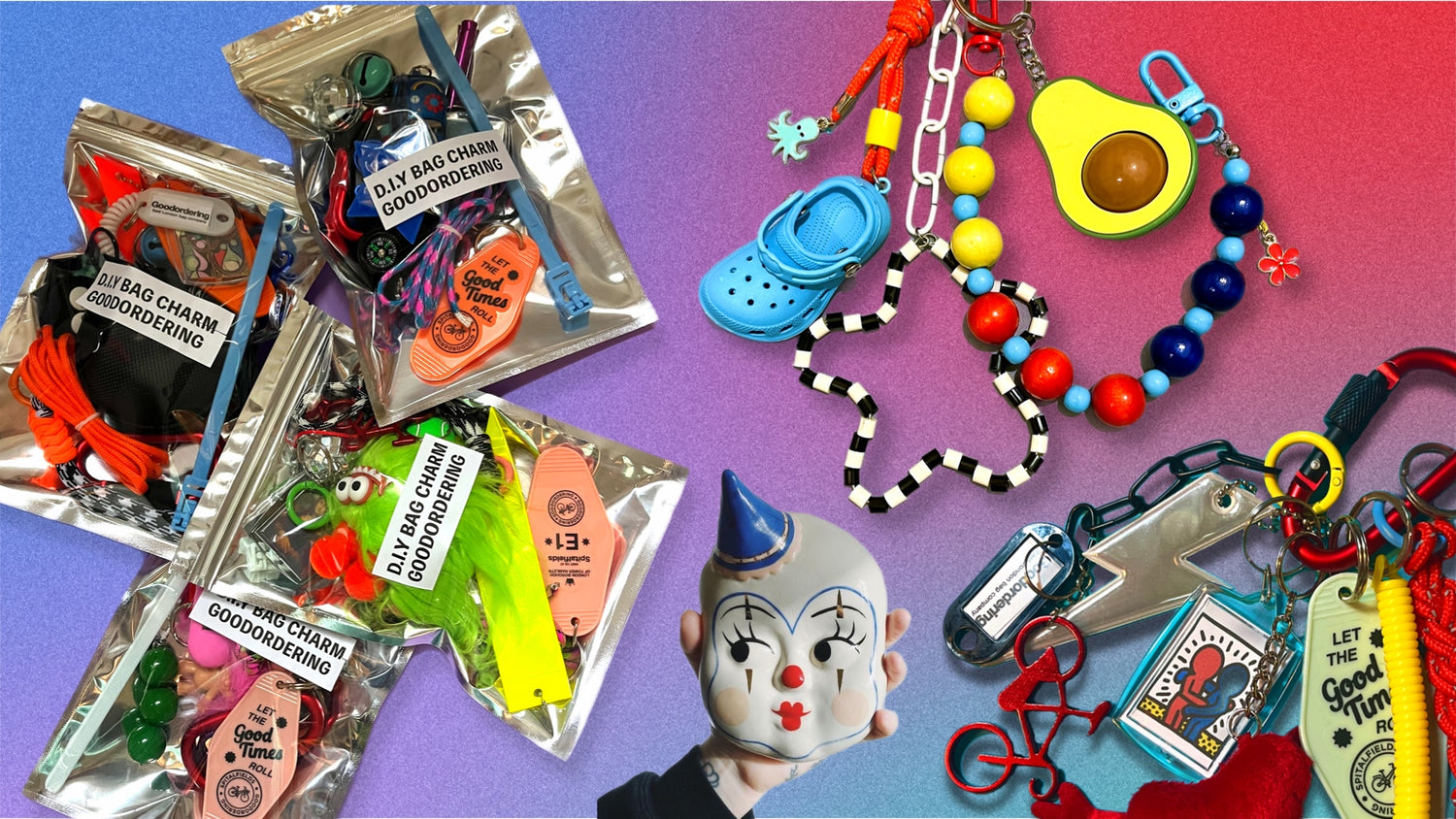
- Bag charms
- Hair accessories
- Scrunchies
- Patches
- Brooches
- Fabric badges
- Small purses
- Coin pouches
- Phone charms
- Bookmarks
- Jewellery
- Friendship bracelets
- Simple wallets
- Reusable fabric accessories
They also have another major advantage: postage is relatively inexpensive.
A small product that fits through a letterbox can be much easier to sell online than something large, heavy or fragile.
2. Personalised products
Personalisation can make an ordinary object considerably more valuable.
A plain tote bag might sell for £10–£15. Add a name, initials, embroidered design or personalised illustration and suddenly it can become a £20–£40 gift.
Personalised products work particularly well for:
- Birthdays
- Weddings
- New babies
- Christmas
- Anniversaries
- Hen parties
- Mother's Day
- Father's Day
- Teacher gifts
- Pet owners
The important thing is to avoid creating a completely different product for every customer.
Instead, create a repeatable personalisation system.
For example, offer a choice of five colours, three fonts and a name. The customer gets something that feels bespoke, but you are still producing it using a standardised process.
3. Embroidery and textile products
Embroidery, crochet and stitched textures have been particularly visible in current craft and fashion trends. Etsy's 2026 trend reporting highlights crochet, embroidery and stitched textures as a major trend, describing a growing interest in handmade, one-of-a-kind pieces. (Etsy)
This doesn't necessarily mean sitting down and individually embroidering every product from scratch.
A commercially minded craft business could create embroidered:
- Patches
- Caps
- Bags
- Pouches
- Clothing
- Wall hangings
- Personalised gifts
- Small textile decorations
The key is to find a way of combining handmade character with repeatable production.
4. Homewares
The popularity of handmade and individual interiors has created another opportunity for makers.
Rather than competing with enormous homeware companies on price, small craft businesses can sell objects that feel distinctive.
Examples include:
- Handmade candles
- Ceramic mugs
- Small vases
- Plant pots
- Textile cushions
- Wall hangings
- Decorative tiles
- Prints
- Wooden objects
- Baskets
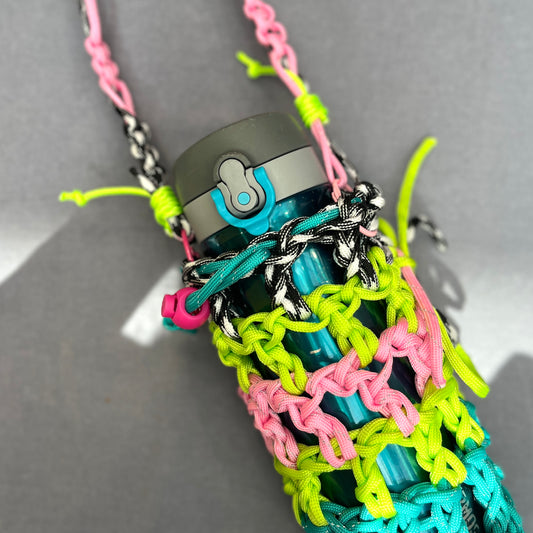
- Macramé
- Small lampshades
- Decorative storage
Etsy's current trend reporting also points towards expressive interiors, handcrafted textures and collections of personal objects rather than completely anonymous, minimalist spaces. (Etsy)
The opportunity is not necessarily to make a whole house's worth of furniture. It might be to create small objects that give a home personality.
5. Prints and artwork
Artwork is another interesting category because the original creative work can potentially be turned into multiple products.
You could create one illustration and sell it as:
- An art print
- Greeting cards
- Postcards
- Stickers
- Notebooks
- Calendars
- Tote bags
- Phone cases
- Digital downloads
This is one of the fundamental principles of scalability in creative businesses:
Create once, sell many times.
Instead of constantly creating completely new designs, a successful product can become the foundation for a small collection.
6. Craft kits
Interestingly, you don't always have to sell the finished craft.
You can sell the opportunity to make it yourself.
Craft kits can include everything someone needs to create a particular project, such as:
- Embroidery kits
- Crochet kits
- Jewellery-making kits
- Candle-making kits
- Kids' craft kits
- Needle-felting kits
- Sewing kits
- Model-making kits
- Painting kits
This is particularly appealing because the customer is buying an experience as well as a product.
It also potentially allows the maker to batch-produce the components rather than spending hours creating each finished item.
7. Upcycled products
Upcycling can be a particularly good niche for UK-based makers because the story behind the material can become part of the product.
Old fabrics, unwanted clothing, vintage textiles, advertising banners, damaged leather goods and surplus materials can all become raw materials for something new.
Products could include:
- Upcycled bags
- Pouches
- Baskets
- Aprons
- Cushions
- Patchwork items
- Accessories
- Pet products
- Small homewares
The challenge is consistency. If every piece is completely unique, scaling becomes difficult.
But that uniqueness can also justify a higher price.
This creates an interesting middle ground: limited editions.
Instead of promising customers that you can make hundreds of identical products, you can produce 20, sell them, then move onto the next fabric or design.
8. Seasonal products
One of the easiest ways to create repeat customers is to build a product range around the calendar.
Christmas is the obvious example, but there are many others:
- Valentine's Day
- Easter
- Mother's Day
- Father's Day
- Halloween
- Weddings
- Summer festivals
- Back to school
- Birthdays
Seasonal products can be particularly effective on marketplaces because customers are actively searching for gifts.
The downside is that the business becomes more seasonal, so you'll need to plan production and stock well in advance.
Etsy: the obvious place to start
For many UK makers, Etsy is an obvious starting point because it already attracts customers looking specifically for handmade, creative and unusual products.
Etsy says that sellers can offer items that are made, designed, handpicked or sourced by them, subject to its Creativity Standards. (Etsy)
But Etsy isn't free.
UK sellers currently pay a listing fee, a 6.5% transaction fee and Etsy Payments processing fees, with other potential charges including advertising and regulatory fees. (Etsy)
This matters enormously when calculating your selling price.
If you sell something for £20, £20 is not your profit.
You need to calculate:
Materials + labour + packaging + postage + marketplace fees + marketing + overheads = true cost
Only after that can you work out whether the product is actually profitable.
Don't forget niche craft markets
Online selling isn't the only option.
The UK has a huge network of craft fairs, makers' markets, design markets, Christmas markets and independent shopping events.
And niche markets can sometimes be more valuable than enormous general markets.
A market aimed specifically at vintage clothing, ceramics, illustration, cycling, plants, interiors, children's products or independent fashion might attract exactly the kind of customer who is prepared to spend more on something unusual.
Markets also offer something Etsy can't easily provide:
instant customer feedback.
You can put 30 products on a table and see what people pick up.
Which colours do they notice?
Which products do they ask about?
What do they think is too expensive?
What do they buy immediately?
That information can be incredibly valuable when deciding what to make next.
The importance of making something recognisable
One of the biggest mistakes new craft businesses make is trying to sell everything.
A bit of jewellery. Some candles. A few paintings. A tote bag. Some ceramics. Maybe some soap.
The result can feel like a craft stall rather than a brand.
A stronger approach is to develop a recognisable visual identity.
You might become known for colourful embroidered accessories, quirky illustrated homewares, handmade children's products or upcycled textile bags.
Customers should eventually be able to see a product and think:
"That looks like something from that particular brand."
That recognition is extremely valuable.
The secret is repeatability
If you want to make serious money from craft, don't just think about the product.
Think about the process.
Can you buy materials in larger quantities?
Can you batch-produce?
Can you create multiple products from the same material?
Can you train someone else to do part of the production?
Can you outsource one stage?
Can you use a sewing machine, laser cutter, Cricut, 3D printer or other equipment to reduce repetitive work?
Can you create a design once and apply it to ten different products?
Can you package products efficiently?
Every time you make a process easier, you potentially increase your profit.
From handmade to "handmade brand"
This is perhaps the biggest shift.
A successful craft business doesn't necessarily mean that the founder personally makes every single component forever.
You might start by making everything yourself at the kitchen table.
Then you might buy materials wholesale.
Then work with a local manufacturer.
Then use a production partner for certain components while continuing to design and finish products yourself.
Etsy explicitly allows sellers to work with production partners in appropriate circumstances, provided those relationships are disclosed as required by its policies. (Etsy)
The important distinction is between scaling your creativity and simply becoming another mass-produced product company.
The creative idea, design, aesthetic and brand can remain yours even as the production process becomes more efficient.
What makes the most profitable craft products?
There isn't one magic product that guarantees success.
But commercially, the sweet spot often looks something like this:
Low material cost + low production time + high perceived value + easy postage + repeat purchases.
A £5 product that takes five minutes to make can potentially be more commercially interesting than a £100 product that takes five hours.
That doesn't mean expensive handmade products aren't profitable. They can be extremely successful if customers understand the craftsmanship and are willing to pay for it.
But if you're looking for something scalable, small, repeatable and relatively simple products are often a very good place to start.
Craft doesn't have to mean tiny
There is sometimes an assumption that making money from craft means having a little Etsy shop that brings in a few hundred pounds a month.
It can be much bigger than that.
A craft idea can develop into a proper product business with wholesale customers, independent shops, online sales, markets, collaborations and international customers.
You can sell directly to consumers through your own website, use Etsy to reach people searching for handmade products, sell wholesale to shops and use markets to build a local following.
The different channels can work together.
Start small – but think commercially
The best thing about craft as a business is that you don't necessarily need a huge investment to test an idea.
Make 20.
Sell them.
See what happens.
If they sell quickly, make 50.
Change the packaging.
Try a different colour.
Test a higher price.
Take them to a market.
Put them on Etsy.
See which photographs get the most attention.
Find out which products people pick up but don't buy – and ask yourself why.
The objective isn't simply to make more things.
It's to discover which things people are actually prepared to pay for.
Because ultimately, the business of craft isn't really about making as much as possible.
It's about finding that sweet spot where creativity, efficiency, desirability and profit meet.
And perhaps that is what makes craft such an interesting business opportunity today: you don't have to choose between making something with personality and building something commercially viable.
The challenge is learning how to make the two work together.